

For over a decade, range anxiety has been the biggest psychological barrier to EV adoption. Drivers worry about running out of power, finding a charger, or getting stuck in long queues. But this is changing rapidly.
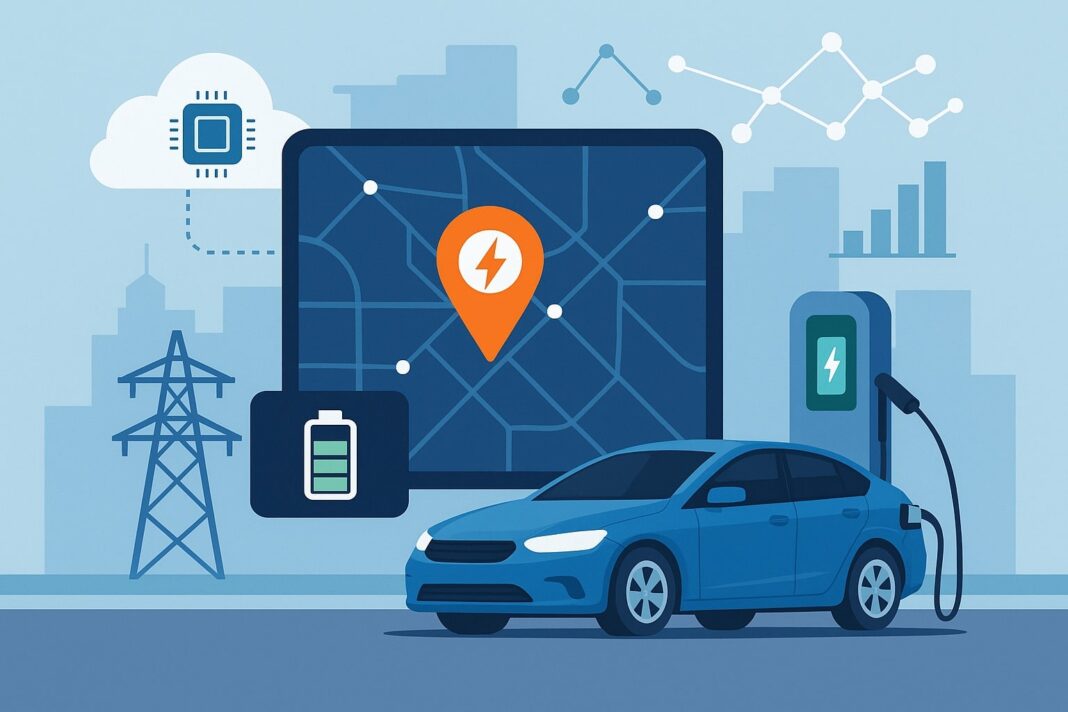
In 2026, the world shifts toward Predictive Charging Networks — intelligent systems that anticipate driver needs, predict charging demand, and ensure chargers are always available before you need them.
This is the first time EVs will feel as convenient as smartphones—and even smarter.
1. What Are Predictive Charging Networks?
Predictive charging networks combine:
- AI-powered navigation
- Cloud-connected charging stations
- Real-time grid data
- Vehicle telematics
- User driving patterns
- Battery health insights
They create a charging ecosystem that thinks ahead, not reacts.
Predictive networks can:
✓ Reserve chargers in advance
✓ Suggest optimal routes based on SOC (State of Charge)
✓ Balance grid load dynamically
✓ Boost charger power when an EV approaches
✓ Eliminate queue times
2. How Predictive Charging Works
It’s powered by four core technologies:
A. AI Driving Pattern Analysis
The system learns:
- Your daily commute
- Your weekend habits
- Your charging behavior
- Weather, traffic, and terrain
- Battery degradation rate
Then it predicts when you’ll need power next.
B. Real-Time Charger Availability Mapping
Charging stations broadcast:
- Occupied / free slots
- Estimated finish time of charging cars
- Faults or outages
- Current power output
- Queue length forecasts
Your EV always knows the best charger along your route.
C. Autonomous Charger Scheduling
The network automatically:
- Books a charger for you
- Times your arrival to match charger availability
- Reduces waiting time to near zero
This is similar to “smart appointment systems” for EVs.
D. Grid-Aware Load Balancing
Predictive networks talk directly to the power grid.
They:
- Avoid peak load
- Shift charging to renewable-rich hours
- Prevent grid overload
- Prioritize fast charging when demand is low
This reduces charging costs and protects grid stability.
3. The EV Will Charge Itself (Literally)
2026 introduces fully automated charging journeys.
Your EV will:
- Know when it needs charging
- Schedule the charging session
- Navigate you to the charger
- Optimize arrival timing
- Provide alternatives if needed
- Self-adjust speed to match slot availability
Range anxiety disappears because the car—not the driver—handles the planning.
4. Predictive Charging Boosts Battery Health
Predictive systems optimize charging rates to extend battery life.
They avoid:
- High voltage stress
- Unnecessary fast charging
- Overheating cycles
Your battery lasts longer, and warranties improve.
5. Benefits for EV Owners
✓ No waiting, no queues
Real-time scheduling ends charger congestion.
✓ Route planning becomes effortless
Your EV chooses the smartest path.
✓ Lower charging costs
AI pushes charging to low-tariff, renewable-rich periods.
✓ Higher safety
No more running the battery dangerously low.
✓ Increased confidence for long trips
Road trips become predictable and stress-free.
6. Benefits for Cities & Energy Providers
Predictive charging networks help cities by:
- Reducing grid overload
- Increasing renewable energy use
- Planning new charging stations based on real data
- Improving traffic flow around stations
Energy providers gain accurate demand forecasting for future infrastructure.
7. The Road to 2030: A Fully Connected Charging World
By 2030, EV charging will be:
-
Fully automated
-
Grid-integrated
-
Renewable-first
-
AI-managed
-
Subscription-based
Charging won’t feel like refueling—it will feel like software, continuously improving through OTA updates.
Conclusion
Predictive Charging Networks mark the end of range anxiety. In 2026, EVs evolve into intelligent companions that plan, schedule, and optimize every watt of energy on your behalf.