


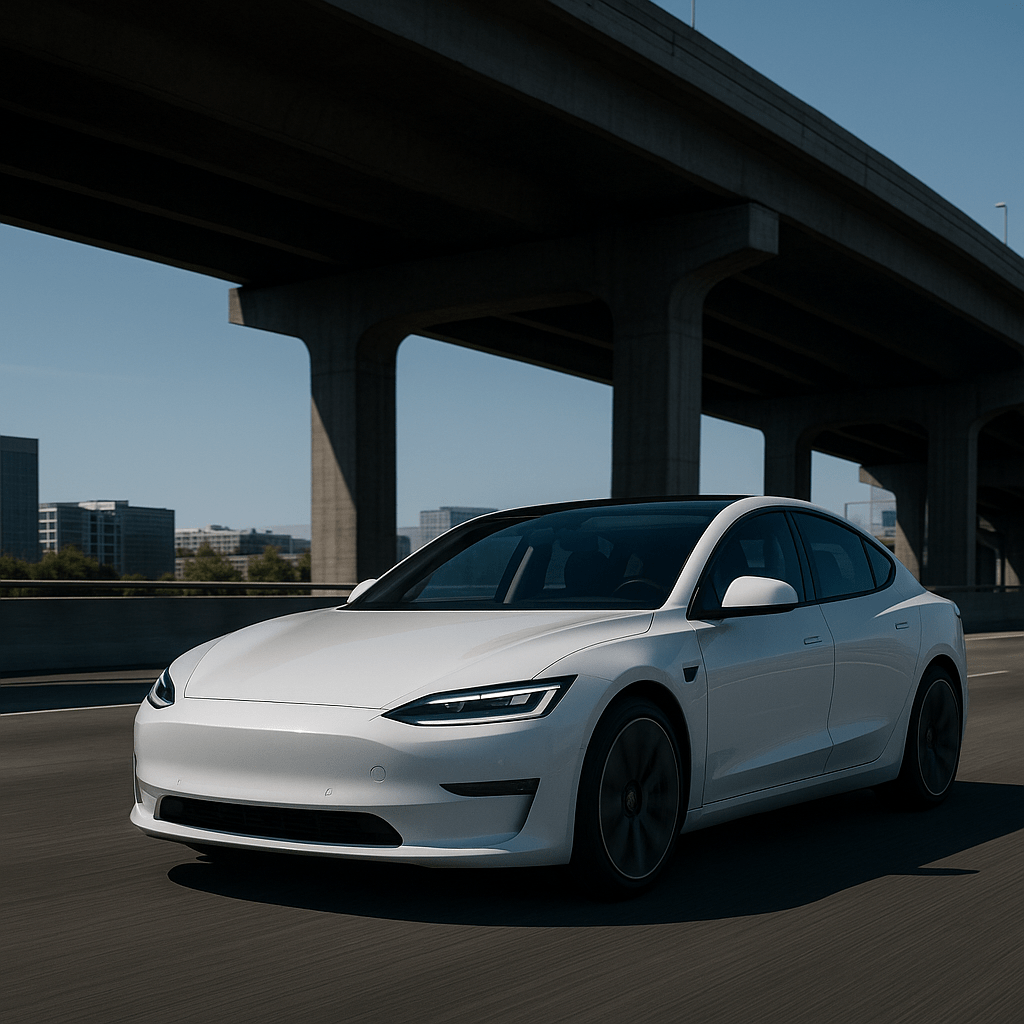
In the United States, electric vehicles are no longer just machines that move people from point A to point B. They are becoming intelligent systems—cars that learn, predict, adapt, and decide. The convergence of artificial intelligence (AI) and electric mobility is reshaping America’s transportation ecosystem, turning vehicles into rolling computers powered by data and algorithms rather than fuel and pistons.
🇺🇸 America’s Shift From Driving to Decision-Making
The U.S. automotive industry has entered a defining phase. Traditional mechanical engineering is giving way to software-first vehicle design, where AI plays the central role. Electric vehicles offer the perfect foundation for this transformation—simpler drivetrains, fewer moving parts, and seamless integration with digital systems.
Companies like Tesla, General Motors, and Ford are no longer competing only on horsepower or range. Instead, they are racing to build the smartest vehicles—cars that can see, think, and respond in real time.
AI as the New Engine of Electric Vehicles
In AI-driven EVs, intelligence replaces mechanical complexity. Advanced algorithms manage everything from battery health to navigation decisions.
Key AI-powered capabilities include:
-
Real-time traffic prediction and rerouting
-
Autonomous driving assistance
-
Driver behavior analysis
-
Predictive maintenance
-
Energy optimization for longer range
Unlike internal combustion vehicles, EVs allow AI systems to directly control power delivery, braking, and regeneration—making decision-making faster and more precise.
Autonomous EVs: America’s Living Laboratories
The U.S. is the world’s largest testing ground for autonomous electric vehicles. States like California, Arizona, and Texas are hosting large-scale pilots where AI-driven EVs operate in real-world conditions.
Companies such as Waymo and Tesla are training vehicles using billions of miles of driving data. These cars rely on neural networks that continuously learn from:
-
Road conditions
-
Human driving patterns
-
Pedestrian behavior
-
Weather variability
Each mile driven improves the intelligence of the system, creating a feedback loop where cars get smarter every day.
Smarter Batteries Through Artificial Intelligence
Battery performance is one of the biggest factors in EV adoption across the United States. AI is transforming how batteries are used, charged, and preserved.
AI-driven battery management systems can:
-
Predict degradation years in advance
-
Adjust charging speed to protect battery life
-
Balance cells for optimal performance
-
Reduce fire and safety risks
This intelligence is helping American EV owners keep vehicles on the road longer while reducing long-term ownership costs.
Cars That Talk to the Grid
AI-powered EVs in the U.S. are becoming part of a larger energy ecosystem. With vehicle-to-grid (V2G) technology, cars can communicate with power grids, homes, and charging networks.
In states like California and New York, EVs are already being tested as:
-
Mobile energy storage units
-
Grid stabilizers during peak demand
-
Backup power sources for homes
AI determines when to charge, when to store energy, and when to send power back—turning cars into active participants in America’s clean energy future.
Urban Mobility and Smart Cities
U.S. cities are rapidly adapting to AI-driven electric mobility. Smart traffic signals, connected infrastructure, and real-time data analytics are reducing congestion and emissions.
AI-powered EVs can:
-
Communicate with traffic systems
-
Avoid high-emission zones
-
Optimize routes for efficiency, not just speed
This is redefining urban planning, especially in tech-forward cities like San Francisco, Austin, and Seattle.
Software Is the New Competitive Advantage
In the American EV market, software updates now matter more than model years. Over-the-air updates allow manufacturers to improve vehicles long after purchase.
Companies working with AI leaders like NVIDIA are building vehicles that gain new features without visiting a dealership—making ownership a continuously evolving experience.
What the Future Holds for the USA
By the end of this decade, AI-driven electric vehicles in the U.S. will:
-
Reduce road accidents significantly
-
Lower transportation emissions
-
Redefine car ownership through autonomy
-
Transform logistics, delivery, and public transport
America’s roads are no longer just pathways—they are becoming data networks, and cars are becoming thinking machines.
Conclusion
The rise of AI-driven electric mobility marks one of the most profound transformations in U.S. transportation history. As cars learn to think, the role of the driver, the meaning of mobility, and the future of cities are all being redefined. In this new era, intelligence—not fuel—will determine how far we go.