


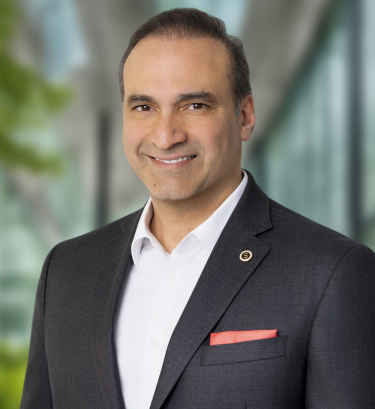

Name: Shadman Zafar
Title: CEO
Company: Vibrant Capital
Website: www.vibrantcapital.ai
Founded: 2026
Headquarters: Texas, USA
Description: Vibrant Capital is an operator-led investment and company-building platform that focuses on scaling applied AI solutions in real-world enterprise workflows to deliver measurable business outcomes.
AI Beyond the Hype: Shadman Zafar on Trust and Execution
Artificial intelligence continues to dominate headlines, boardroom conversations and investor enthusiasm, but for Shadman Zafar, CEO of Vibrant Capital, the real story is unfolding in a quieter, more consequential arena: inside enterprises trying — and often struggling — to turn AI promise into measurable performance. While the public narrative celebrates breakthroughs and billion-dollar valuations, Zafar’s perspective is grounded in operational reality, where success is defined not by technical sophistication alone, but by outcomes that materially improve how businesses function.
A veteran of multiple technology cycles, Zafar has seen this pattern before. Waves of excitement often give way to periods of disappointment when expectations outpace execution. “We’ve been here before,” he says. “The technology evolves faster than the organizations adopting it, and that gap is where disillusionment begins.” His concern is not with AI’s potential — which he believes is immense — but with the industry’s ability to deliver on that potential in a sustained, meaningful way.
It is this conviction that led him to build Vibrant Capital. Rather than positioning the firm as another investor chasing the next breakthrough, Zafar has designed it as a bridge — connecting those building AI technologies with the enterprise operators responsible for making them work in complex, real-world environments. “If AI doesn’t start delivering measurable outcomes for the real economy,” he notes, “we risk repeating the same boom-and-bust cycle we’ve seen in the past.”
Excerpts from an interview with Zafar:
Closing the Gap Between Promise and Performance
Zafar founded Vibrant Capital out of a growing concern that enthusiasm for AI was outpacing its real-world impact. In many organizations, leadership teams were eager to embrace AI, but the results often failed to justify the investment. “There’s a disconnect,” he explains. “Boardrooms are excited, but when you talk to CIOs, the metrics they care about haven’t moved nearly as much as people think.”
Having experienced two “AI winters” — periods marked by inflated expectations followed by sharp declines in funding and interest — Zafar recognized familiar warning signs. He observed that much of the investment community was heavily focused on long-term, ambitious goals such as artificial general intelligence, while enterprise operators in sectors like banking, insurance, logistics and healthcare were left to navigate the complexities of implementation largely on their own.
“Everyone is chasing the horizon,” he says, “but very few are focused on helping operators solve the problems in front of them today.” Vibrant Capital was created to address this imbalance, with a deliberate focus on supporting those responsible for translating technology into tangible business outcomes.
From Model Intelligence to Execution Discipline
In Zafar’s view, the rapid evolution of AI models has fundamentally shifted the industry’s central challenge. The question is no longer whether models are powerful enough, but whether organizations can deploy them effectively. “Model intelligence is no longer the bottleneck,” he says. “Execution is.”
This shift places new emphasis on the less glamorous but critically important aspects of AI adoption: data quality, governance, integration and measurement. Reliable data pipelines, clear accountability structures and well-defined performance metrics have become essential. At the same time, advances in infrastructure — including powerful GPUs, high-quality datasets and emerging architectural patterns such as agent-based systems — have made enterprise-scale AI more accessible than ever before.
Yet, as Zafar points out, these technical advancements alone do not guarantee value. “Technology doesn’t create impact in isolation,” he explains. “It has to be embedded into workflows, into decision-making processes, into the fabric of how a business operates.”
Without that integration, even the most advanced systems risk becoming expensive experiments rather than transformative tools.
Building an Operator-Led Ecosystem
What sets Vibrant Capital apart is its structure. Rather than operating as a traditional investment firm, it functions as an interconnected ecosystem built around enterprise operators. At its core is a network of CIOs who collectively represent significant technology buying power and, more importantly, deep insight into what actually works in practice.
“We start with the operators,” Zafar adds, “They define the problems, they validate the solutions, and they ultimately determine what succeeds.” This operator-first approach influences every aspect of the firm’s strategy. Companies are evaluated not only on their technical capabilities, but on their ability to address real, clearly defined business challenges.
The firm also incubates new ventures by pairing founders with enterprise leaders from the outset. This ensures that products are designed with practical application in mind, rather than retrofitted after the fact. “Too many solutions are built in a vacuum,” Zafar notes. “By the time they reach the enterprise, they don’t align with how businesses actually operate.”
The result is a model in which innovation and demand are closely aligned — reducing friction and increasing the likelihood of successful deployment.
Measuring What Matters
One of the most persistent challenges in AI adoption, according to Zafar, is the tendency to focus on the wrong metrics. Organizations often highlight indicators such as user adoption rates, pilot program participation or the number of models deployed. While these metrics may signal activity, they do not necessarily reflect impact.
“Activity is not the same as value,” Zafar emphasizes. “What matters is whether you’re reducing costs, improving efficiency or making better decisions.” Without these outcomes, he argues, even the most sophisticated AI systems fall short of their promise.
He also points to a broader misconception: treating AI as purely a technical initiative. In reality, successful adoption requires organizational transformation. Processes must be redesigned, governance frameworks strengthened and teams aligned around new ways of working. “AI is as much about change management as it is about technology,” he says.
This perspective underscores the importance of leadership in driving meaningful results.
Trust as a Strategic Advantage
In an industry often characterized by bold claims and polished marketing, Zafar has taken a deliberately different approach to building credibility. At Vibrant Capital, participation is intentionally selective — and, at times, difficult.
“We make it hard to get in,” he says. Companies seeking to engage with the firm must undergo rigorous evaluation by independent CIOs. Even those that pass are not allowed to pitch directly to the network. Instead, endorsements must come from operators who have firsthand experience with the product.
“If a solution works, the operators will advocate for it,” Zafar explains. “If it doesn’t, no amount of marketing will change that.” This emphasis on authenticity reflects a broader belief that trust is the most valuable currency in the AI ecosystem.
By prioritizing trust over scale, Vibrant Capital aims to create a strong signal in a market often overwhelmed by noise. “In a crowded space, credibility becomes your differentiator,” he says.
Leadership Grounded in Relationships and Learning
Zafar attributes much of his leadership philosophy to his focus on long-term relationships. Rather than approaching interactions as transactional, he invests in building deep, enduring connections with the people he works with. “Relationships compound over time,” he says. “They create alignment, resilience and a shared sense of purpose.”
Equally important is his commitment to continuous learning. Having navigated multiple waves of technological change, Zafar understands that adaptability is essential. “Every cycle teaches you something new,” he reflects. “But it also requires you to unlearn what no longer applies.”
This willingness to evolve has shaped his approach to leadership, particularly during periods of uncertainty. It allows him to remain grounded while still embracing new opportunities.
Navigating Setbacks with Trust and Candor
No transformation journey is without setbacks, and AI adoption is no exception. For Zafar, the key to navigating challenges lies in maintaining a high level of trust within organizations. “High-trust environments move faster,” he explains. “They make decisions more quickly and adapt more effectively.”
He also emphasizes the importance of what he calls “radical candor” — open, honest communication that addresses issues as they arise. “You can’t fix what you’re not willing to confront,” he says. By creating a culture where feedback is encouraged and acted upon, organizations can accelerate learning and improve outcomes.
Mistakes, in his view, are inevitable. What matters is how quickly teams learn from them and adjust. “Progress is not linear,” Zafar notes. “It’s iterative. It’s built through small improvements over time.”
A Cautionary Note for AI Startups
As AI tools become more accessible, Zafar sees a growing risk among startups: confusing technical capability with real-world value. “Just because you can build something doesn’t mean it solves a meaningful problem,” he says.
Many solutions that perform well in controlled demonstrations struggle in enterprise environments, where requirements around scalability, governance and reliability are far more demanding. “The bar is much higher than a demo,” Zafar explains.
He encourages founders to focus on solving clearly defined problems and to invest in the foundational elements required for enterprise readiness. This includes not only technology, but also processes, compliance and measurement frameworks.
Zafar also advocates for a more nuanced approach to AI architecture. Rather than relying on a single, all-encompassing model. “The future is not one model to rule them all,” he says. “It’s an ecosystem of capabilities working together.”
What Will — and Won’t — Transform the Industry
Looking ahead, Zafar believes the most significant impact of AI will come not from headline-grabbing breakthroughs, but from its integration into everyday operations. Autonomous systems capable of handling tasks such as compliance monitoring, fraud detection and resource optimization have the potential to drive substantial efficiency gains across industries.
“The real transformation happens when AI disappears into the workflow,” he says. “When it becomes part of how work gets done, not something separate from it.”
At the same time, he cautions against overreliance on increasingly large and generalized models. While they have their place, he argues that the future of enterprise AI will depend more on effective data management and disciplined execution. “Bigger models alone won’t solve the problem,” Zafar notes. “Execution will.”
This perspective reflects a broader shift in how success is defined within the industry.
Preparing for the Next Phase
Vibrant Capital’s future initiatives are closely aligned with its operator-centric philosophy. The firm is developing frameworks to help enterprises assess their readiness for AI adoption, as well as defining architectural standards for what Zafar describes as the “post-AI era.”
“These are tools to help operators take control of their own transformation,” he explains. Rather than relying on external narratives or trends, organizations can use these frameworks to make informed, strategic decisions.
Ultimately, Zafar’s vision is one of alignment — between technology and application, between innovation and execution, and between ambition and reality. “AI has enormous potential,” he says. “But potential alone is not enough. What matters is what we do with it.”
As the industry continues to evolve, his message serves as both a caution and a guide. The future of AI will not be determined solely by what is possible, but by what is practical — and by the ability of organizations to turn promise into performance.